Could solar lower your operation's power costs?
Solar options for farms, vineyards and horticultural businesses in Nelson and Marlborough. Start with how you use power.
Could solar lower your operation's power costs?
Solar options for farms, vineyards and horticultural businesses in Nelson and Marlborough. Start with how you use power.
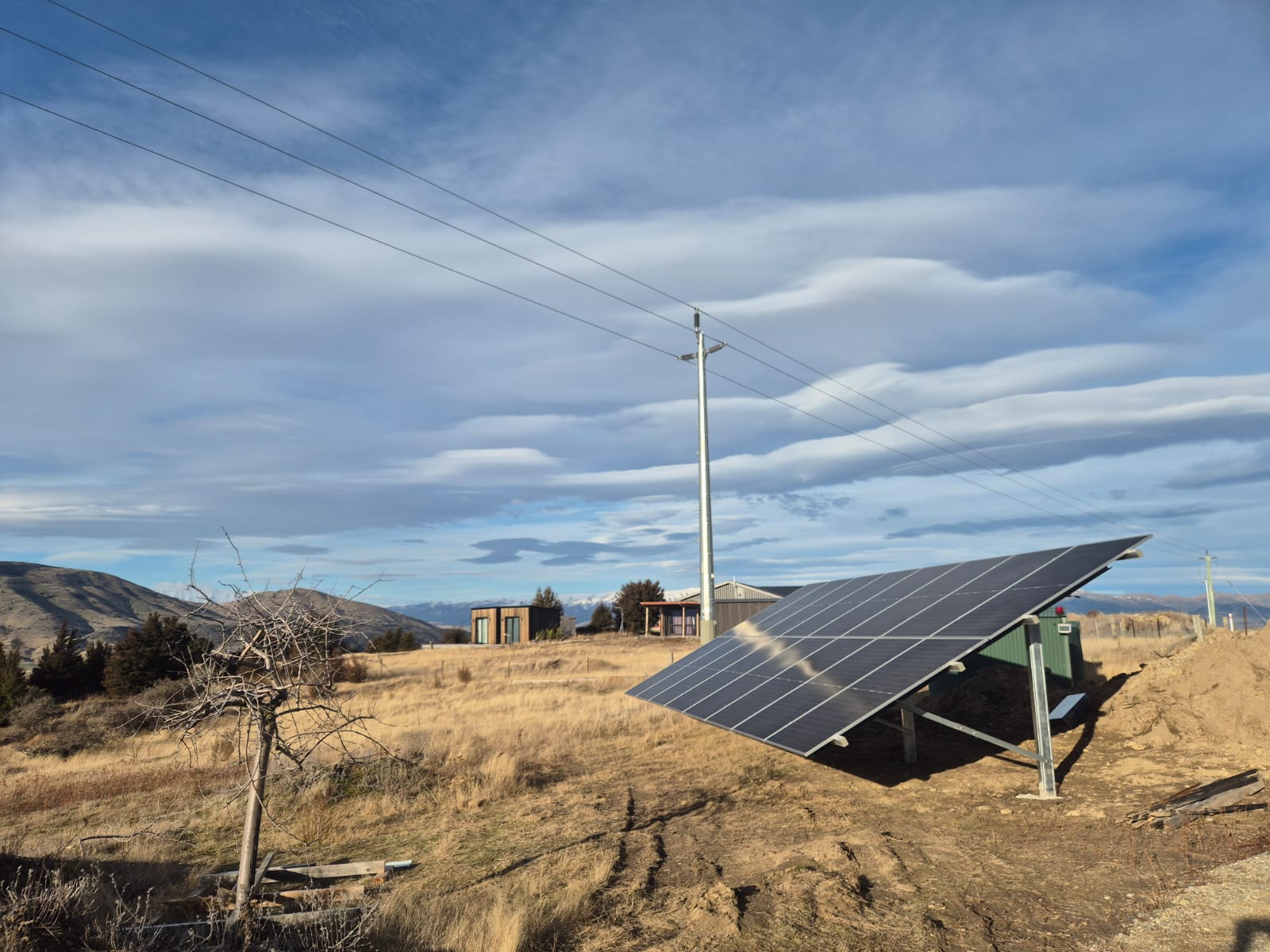
Ground-mounted solar installation.
Start with your power use.
A well-designed solar system starts with understanding when and how your operation uses electricity. We review your power bills, interval usage data, major electrical loads and operating hours to build a picture of your actual energy demand.
From there, we consider available roof and ground-mount space, orientation, shading, existing electrical infrastructure and supply capacity to determine the most suitable system design.
Where battery storage or backup power is being considered, we assess what you want the battery to achieve, whether that's increasing solar self-consumption, reducing grid reliance or providing backup for critical loads.
Designed and installed by qualified electricians.
What makes the business case?
- Daytime energy use
- How much of the solar generated can be used directly by your operation. Higher self-consumption can significantly improve the value of a solar system.
- Seasonal demand
- How your electricity demand changes throughout the year and how those periods align with expected solar generation.
- Site & electrical infrastructure
- Available roof or ground-mount space, orientation, shading, existing switchboard capacity, three-phase supply and network connection requirements can all influence system design and cost.
- Electricity tariffs & export
- Your electricity rates, tariff structure and export rates all affect the value of the energy generated and the potential return from solar.
- System size & investment
- The right system isn't necessarily the largest one. We size solar and battery storage around your usage, site and objectives to achieve the best practical outcome for your operation.
Your power bill tells us what you're paying. Your interval usage data tells us when you're using it. Together, they allow us to model a system around your actual operation and assess expected generation, self-consumption and potential savings.
A practical place to start.
Tell us about your operation.
Share your location, main loads and what you want solar to achieve.
Talk through the options.
Review your power-use pattern and the roof or land available.
Agree the next step.
Agree what information or site assessment is needed to take the options further.
Let’s look at your operation.
Tell us a little about your operation and how you use power. We’ll discuss your site, major electrical loads, available roof or land, and what you’re looking to achieve with solar.
From there, we can determine what information is needed to assess your options and recommend the next steps.
No power bill is needed to get started — we can review your usage data as part of the assessment.
Common questions.
What if our power use is seasonal?
Compare your busiest periods with generation across the year. Usage data can help show where solar may fit and where it may not.
Roof or ground mount?
Available space, shading, roof condition, cable routes and connection requirements all matter. The right option depends on your site.
Will a battery provide backup?
Backup is not automatic. It needs compatible equipment and the right setup for the loads you want to keep running.
What do we need to get started?
Your operation type, location and a recent power bill are a useful start. Retailer usage data helps if you have it; a detailed design is not needed to enquire.